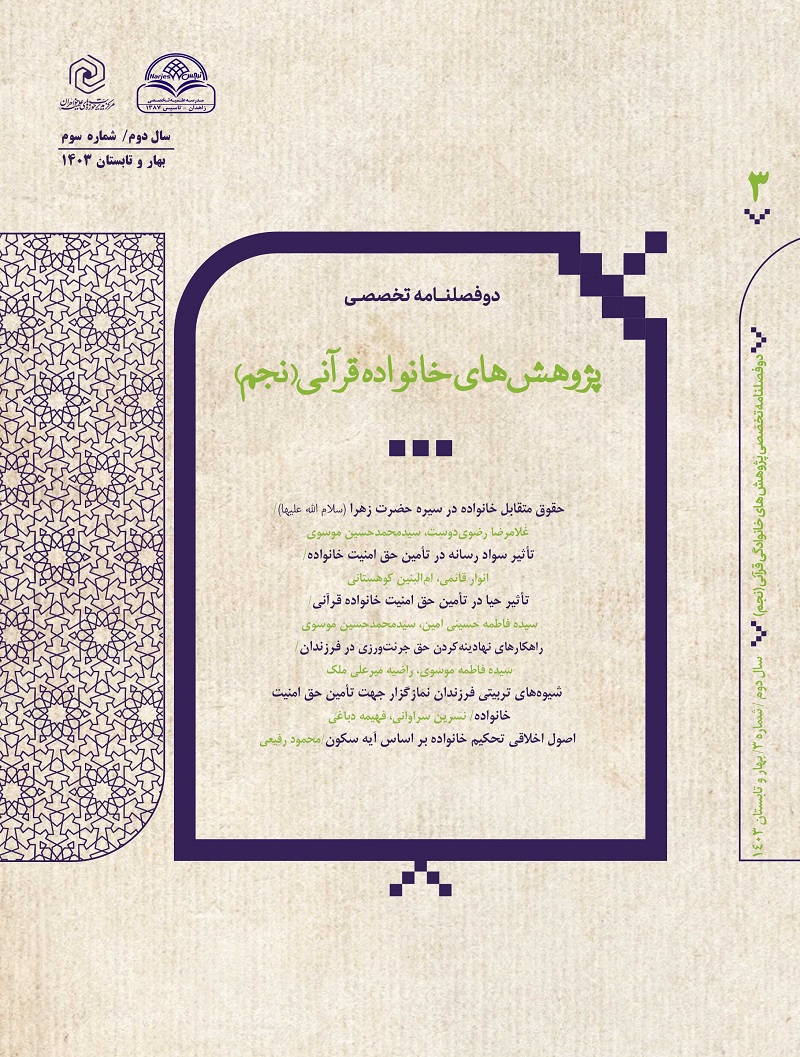
نجم/ دوفصلنامه علمی تخصصی پژوهش های خانواده قرآنی

نجم/ دوفصلنامه علمی تخصصی پژوهش های خانواده قرآنی

اصول اخلاقی تحکیم خانواده بر اساس آیه سکون

نوع مقاله : علمی- تخصصی

نویسنده
استاد سطوح عالی حوزه علمیه و دانشگاه با مدرک سطح4، دانشجوی دکترای مدرسی اخلاق اسلامی دانشگاه شهید بهشتی (ره) تهران
چکیده
در شرایطی که اغلب آمارهای جهانی نشان‌دهنده کاهش ازدواج، افزایش فرزندان نامشروع و طلاق هستند، خطر سستی بنیان خانواده و فروپاشی آن به‌عنوان یکی از معضلات فرهنگی در سطح جهانی مطرح است. حل کامل این معضل، نیازمند تحقیقات بین‌رشته‌ای در حوزه‌های جامعه‌شناسی، روان‌شناسی، اخلاق، فقه، حقوق و... در قالب یک پروژه تحقیقاتی جامع می‌باشد. دین اسلام برای تحکیم خانواده پاسخ‌هایی با نگاه‌های مختلف اخلاقی، فقهی و... دارد. آیه سکون (روم: 21) با تبیین اصول اخلاقی تحکیم خانواده، بخش مهمی از بعد اخلاقی این مسئله را پاسخ می‌دهد. این تحقیق با هدف تبیین اصول اخلاقی تحکیم خانواده از آیه سکون و مصادیق آن از رفتار و گفتار معصومین، با روش کتابخانه‌ای به تحلیل محتوای آیه پرداخته است و نتیجه‌گیری کرده که اصل مودت به‌معنای محبت شدیدی است که در رفتار تجلی می‌کند و ‌اصل رحمت به‌معنای نرم‌خویی و دلسوزی در مسیر تکاملِ غیر است. این دو اصل در خانواده به‌عنوان دو رکن اساسی، نقش مهمی در تأمین حقوق متقابل اعضا ایفا می‌کنند. در رفتار و گفتار ائمه: مصادیق متعددی از این دو اصل وجود دارد. از جمله مصادیق مودت در روایات می‌توان به عشق‌ورزی زبانی، کار کردن زوجین در خانه، دلچسب نمودن رابطه‌ی زناشویی، پرهیز از به‌خشم آوردن همسر و تأمین مالی اشاره کرد. همچنین مصادیق رحمت در روایات شامل تذکر دلسوزانه‌ی بدی‌ها، مدارای همیشگی، زبان‌بازی و تلاش برای سازگاری است.
 
کلیدواژه‌ها

عنوان مقاله English

Ethical Principles of Strengthening the Family Based on the Verse of Tranquility (Sukoon)

نویسنده English

Mahmoud Rafiey
Professor at the higher levels of the seminary and university with a level 4 degree،Doctoral Student in Islamic Ethics Teaching, Shahid Beheshti University, Tehran
چکیده English

In a situation where most global statistics show a decrease in marriages, an increase in illegitimate children, and divorce, the danger of weakening the foundation of the family and its collapse is considered one of the cultural problems at the global level. A complete solution to this problem requires interdisciplinary research in the fields of sociology, psychology, ethics, jurisprudence, law, etc., in the form of a comprehensive research project. The religion of Islam has answers with different ethical, jurisprudential, etc. perspectives for strengthening the family. The verse of tranquility (Rum: 21), by explaining the ethical principles of strengthening the family, answers an important part of the ethical dimension of this issue. This research, with the aim of explaining the ethical principles of strengthening the family from the verse of tranquility and its examples from the behavior and words of the Infallibles, has analyzed the content of the verse using a library method and has concluded that the principle of mawaddah means intense love that manifests itself in behavior, and the principle of rahma means gentleness and compassion in the path of the other’s development. These two principles play an important role in ensuring the mutual rights of members as two basic pillars in the family. There are numerous examples of these two principles in the behavior and words of the Imams (Peace Be Upon Them). Among the examples of mawaddah in narrations, we can mention verbal expressions of love, couples working in the house, making marital relations enjoyable, avoiding angering one’s spouse, and providing financial support. Also, examples of rahma in narrations include compassionate reminders of wrongdoings, constant tolerance, gentle talk, and efforts to adapt.
 

کلیدواژه‌ها English

Strengthening the Family
Principles of Strengthening the Family
Islamic Family
Verse of Tranquility
 Mawaddah (Love)
 Rahma (Compassion)
دوره 2، شماره 3
شماره سوم با محوریت «حقوق متقابل در خانواده قرآنی» انتشار یافت.
شهریور 1403
صفحه 109-138